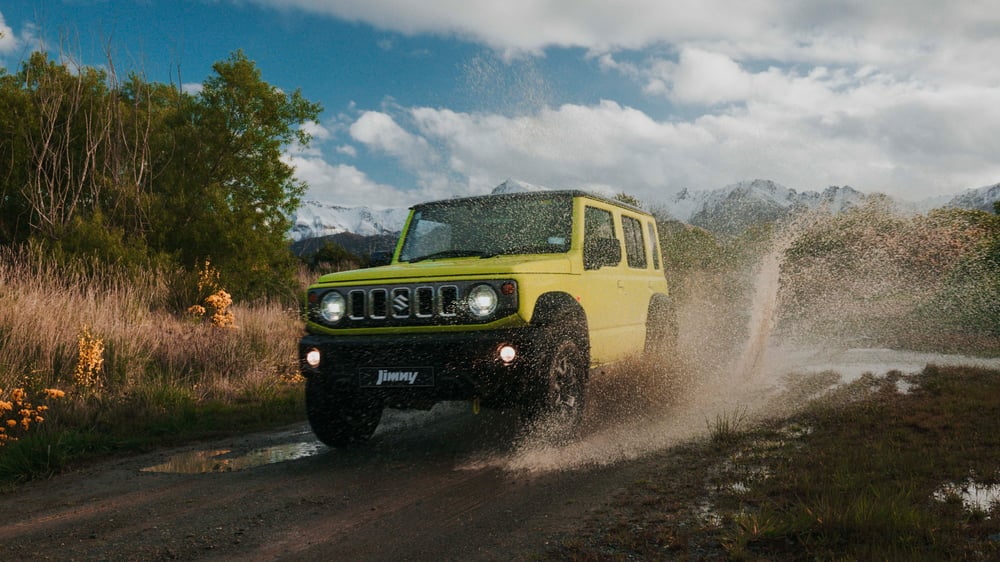
Nothing is quite as liberating as taking your 4x4 off-road into the bush and finding out if you are up to the challenge of “man vs. nature”.
Before venturing into the adventure of four-wheel driving, here are some tips to help ensure you don’t find yourself spending the night stranded, alone and cold in the New Zealand wilderness.
1. Always Drive With A Buddy
There’s safety in numbers. We recommend, especially on more challenging routes, travelling with a second vehicle (or group) to ensure that you’ll be able to get out of any sticky situations (yes, we mean literally getting stuck in the mud). Plus having a friend to share the experience makes it more enjoyable!
2. Pack The Essentials
If you’re going to be taking your 4x4 off the beaten track, then a strong tow rope should be your new best friend. Do keep in mind that your tow rope is useless if you don’t have a buddy to tow you - so again, emphasis on the need for travelling with a minimum of two vehicles.
The weather in New Zealand can be unpredictable. On top of your regular car emergency kit essentials add in an extra can of fuel, spare tyre and air compressor and ultra-high frequency radio to name a few.
Remember to include warm layers, wet weather gear and sturdy shoes…and an extra change of clothes and shoes. You will be surprised how much time is spent outside your vehicle assessing the situation, especially when the terrain gets tricky.
3. Avoid The "Death Grip"
There are two reasons why you shouldn’t drive with a tight grip - the first one being that you might break a thumb. This isn’t an exaggeration. When you have your thumbs folded tightly around the inside of your steering wheel, any sharp movements can strain, dislocate or even break them.
The second reason is that you need to allow your wheels to centre themselves - otherwise they could be headed off in slightly different directions. Gripping onto the steering and fighting the terrain will only slow you down. Loosen your grip and stick to gentle movements.
A lot of first timers learn this lesson the hard way - don’t let yourself be one of them.
4. Understand The Terrain
You’ll find four main hazardous terrains out there - mud, rocks, sand and water. If you don’t know what you’re doing, you could find yourself stuck or even worse, causing major damage to your vehicle. Be sure to understand and know how to adapt to driving through them before you set off on your adventure.
Some 4WDs, like the Suzuki Jimny, have a low range feature (4L – four wheel drive, low range) which works like a gear multiplier to give you more control in low-speed and low-grip conditions. This will make a huge difference when traversing soft sand, mud or snow, through shallow water, up steep hills and declines and rock-crawling. Pretty much anywhere you need maximum traction and controlled power - but it’s important to switch into low range before you need it via the dial in the cabin.
5. Momentum vs. Acceleration: Know The Difference
Momentum is the speed that the vehicle has already built up. Acceleration is what you do to gain this speed. Essentially, you don’t want to accelerate when you should just be leveraging your momentum.
Driving through mud and soft sand is a good case in point - if you accelerate rapidly, you’re going to dig yourself into a hole (and end up horribly stuck). Accelerate before you enter the mud or soft sand, and then glide through using the momentum you’ve built up.
6. Always Stay Straight On The Slopes
If you try to take a hill diagonally, you’re running a higher risk of rolling your 4x4. Try to keep your vehicle as straight as possible when going downhill, and if you feel you’re beginning to slip sideways, slow down and straighten up.
When you’re travelling down a steep slope and engine braking isn’t enough to slow the vehicle, hill descent control is a feature that gently applies the brakes and helps you maintain a slow and controlled speed down the slope. That way you can concentrate on steering while keeping the wheels turning at a manageable speed.
7. Clear Obstacles One Wheel At A Time
If, and when you encounter an obstacle (like a fallen tree) approach it at an angle that allows you to climb over it one wheel at a time. The other three wheels give you the traction you need to lift that wheel over the obstacle. Be very careful when you’re doing this (especially if there’s a possibility that the obstacle might shift) because this can cause damage to the undercarriage.
Going off-road can be full of ups and downs and plenty of surprises. However, it’s the breathtaking New Zealand scenery and the rush of adventure that make every moment worth it. Here are some more tips on being prepared for that 4-wheel drive adventure, so you’re ready for whatever is thrown your way.
If you’re on the lookout for a new vehicle for your next expedition, download our insightful Guide to Buying a New Car today!